Industrial Visits for Engineering Students: What Makes an IV Actually Worthwhile?
An industrial visit should do far more than just fill an empty slot on a department timetable.
The real test of an IV is simple: Did students watch theoretical concepts come alive in a complex, real-world ecosystem?
When coordinated well, an industrial visit bridges the critical gap between textbook equations and field execution. But what separates a forgettable campus getaway from a genuinely transformative learning experience?
Here are the 7 core elements that make an industrial visit worth the time, travel, and faculty coordination, and how modern facilities are changing the game.
1. Direct Alignment with the Curriculum
A valuable IV begins with academic context. When students can immediately link what they see on the floor to their current semester's syllabus, the trip stops feeling like an academic pause button and becomes a direct extension of the classroom.
Depending on the discipline, technical exposure should directly touch on:
- Mechanical Engineering: Heavy drive mechanisms, hydraulics, pneumatics, and gear transmission.
- ECE & EEE: Sensor integration, power distribution, automated control loops, and safety-critical electronics.
- Computer Science & IT: Real-time system rendering, VR motion tracking, and human-computer interaction (HCI).
- Civil & Environmental: Large-scale structural load distribution, water treatment facilities, and dynamic pressure management.
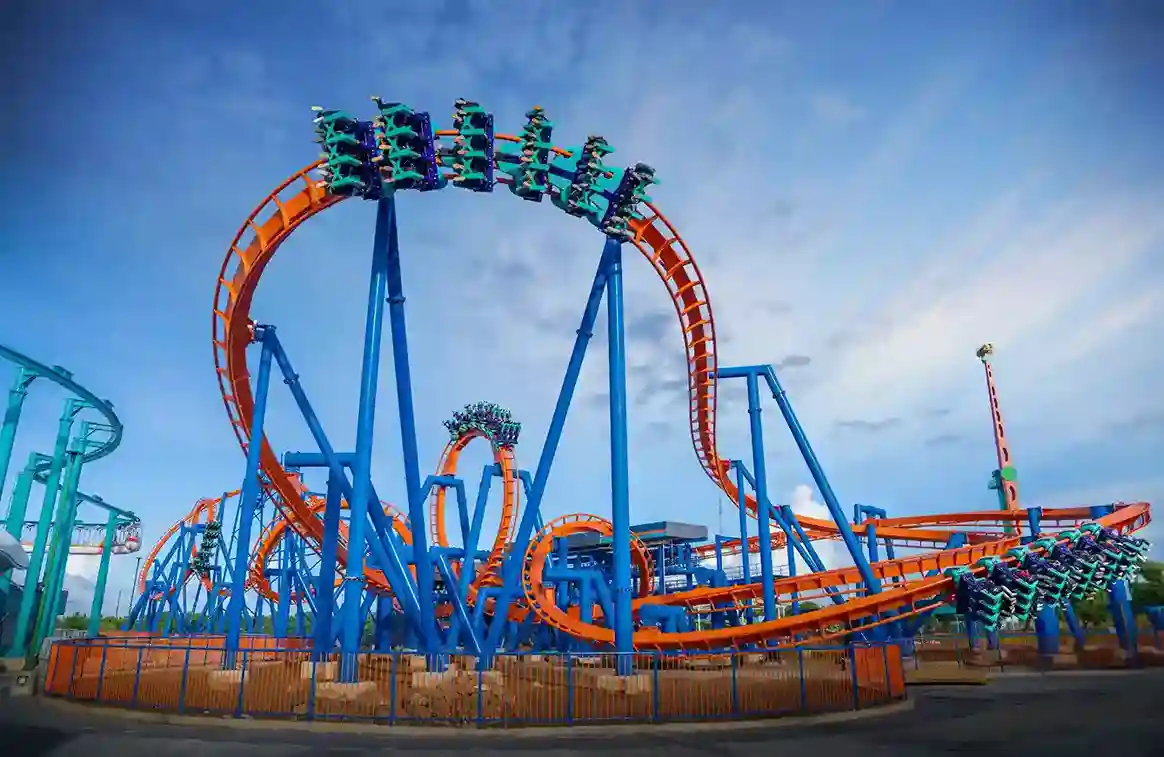
Example in Action: Recent college visits to Wonderla have allowed Mechanical Engineering students to study industrial-grade pneumatic systems, while Electronics & Communication (ECE) students analyzed sensor arrays governing real-time ride safety.
2. Dynamic Systems, Not Static Presentations
Students can sit through slides and video lectures on campus. An IV gains its true value when students step behind the scenes to observe systems operating under real load conditions.
Observing live equipment forces students to consider real-world parameters:
- How do maintenance schedules account for continuous mechanical stress?
- What fail-safe measures step in when a primary power loop drops?
- How do multi-disciplinary engineering decisions interact under high operational demands?
Seeing a roller-coaster’s electro-magnetic braking system or dynamic fail-safe loop operating in real time delivers an intuitive understanding that static diagrams simply cannot replicate.
3. A Multi-Disciplinary Operating Environment
In the modern industry, engineering rarely happens in isolated silos. A single operating environment often demands seamless integration across Mechanical, Electrical, Electronics, Software, and Civil engineering.
Exposing students to cross-disciplinary operations helps them realize that their specialization is just one part of a larger ecosystem. For instance, a Computer Science cohort observing a Virtual Reality attraction learns not just about software code, but how latency, mechanical motion tracking, and physical safety barriers must synchronize perfectly to work safely.
4. Environment That Encourages "Why?"
The best technical visits create room for genuine intellectual curiosity. The objective isn't just to show students what exists, but to help them investigate why it was designed that way.
An impactful IV prompts critical questions:
- Why was a hydraulic system chosen over a pneumatic one for this specific load?
- What redundant protocols kick in during an emergency override?
- How do field conditions force engineers to modify standard theoretical designs?
When students are encouraged to ask these questions, passive sightseeing transforms into active technical analysis.
5. Safety Engineered into the Conversation
Safety shouldn't be treated as an administrative afterthought or a brief policy disclosure; it is a core engineering discipline.
Inside a high-throughput facility, students learn how risk management is embedded into physical hardware and operational logic. Observing fail-safe interlocks, safety-rated motion sensors, dynamic load monitoring, and strict preventive maintenance schedules shows students what engineering looks like when human lives directly depend on absolute reliability.
6. Post-Visit Analytical Rigor
A great IV continues long after the bus ride back to campus. It should equip students with concrete observations, data points, and operational insights to discuss, document, and analyze.
To maximize retention, post-visit activities can include:
- System Breakdown Reports: Analyzing a specific subsystem observed during the visit.
- Problem-Solving Exercises: For example, during a visit to a large-scale water treatment facility, Mechanical and Environmental students can analyze real-world sedimentation challenges and propose optimized filtration workflows.
- Classroom Debriefs: Debating trade-offs between theoretical efficiency and operational reality.
7. High Engagement Without Sacrificing Rigor
Academic depth and high student engagement are not mutually exclusive. An IV that is academically dense but dull risks losing student interest entirely.
When a visit balances high-level technical exposure with an engaging, dynamic atmosphere, students remain attentive and receptive. That engagement leaves a lasting impression, ensuring that technical takeaways are remembered long after semester exams are over.
Why Consider Wonderla for Your Next Engineering IV?
An amusement park might not be the first venue that comes to mind for an engineering visit, until you look beneath the surface.
Behind the thrills lies a massive, highly sophisticated engineering complex operating 365 days a year. A visit to Wonderla offers engineering departments structured, multi-disciplinary technical exposure across:
- Hydraulics & Pneumatics: High-pressure fluid power mechanisms and dynamic braking loops.
- Sensors & Automation: Programmable Logic Controllers (PLCs), optical sensors, and automated control systems.
- Electrical Infrastructure: Substation management, power distribution, and dynamic motor controls.
- Advanced Tech & Systems: High-density Virtual Reality (VR), real-time rendering, and spatial tracking.
- Civil & Environmental Engineering: High-capacity water treatment, filtration plants, and structural stress management.
Note: Available technical modules and behind-the-scenes access vary by location and group size. Faculty coordinators are encouraged to connect with our team to align the visit with specific course outcomes.
Frequently Asked Questions:
Which engineering branches benefit most from an IV at Wonderla?
Our technical tours cater to Mechanical, Electrical, ECE, Computer Science, IT, and Civil/Environmental engineering streams, with tailored focus areas for each department.
Can faculty customize the visit focus to match our syllabus?
Yes. Faculty coordinators can discuss their specific learning objectives prior to the visit to ensure our technical staff highlights the most relevant subsystems and operational workflows.
How should students prepare before arriving?
We recommend assigning 3 to 4 specific observation goals or system-level questions beforehand. Students gain significantly more value when they arrive knowing exactly what engineering processes to look for.
Ready to Plan an IV That Delivers Real Technical Value?
Skip the generic site visits. Give your students a front-row seat to world-class machinery, automation, and real-time operations in action.
Share your student count and preferred Wonderla park location, and we’ll customize an effortless, budget-friendly institution package tailored just for your group!


